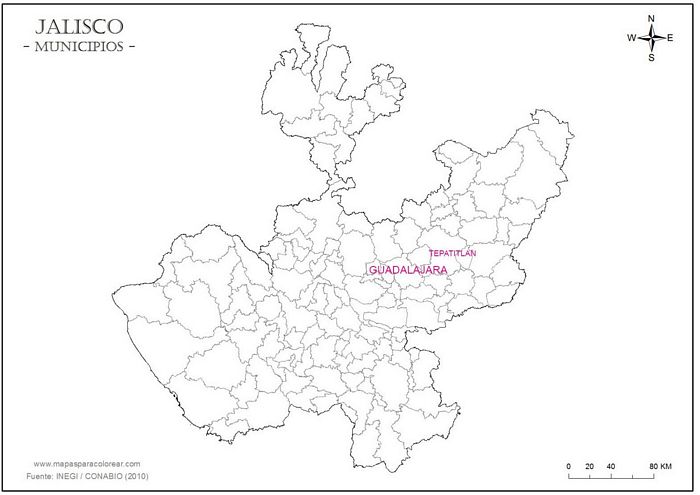
Tepatitlán
La Brigada Bracamontes
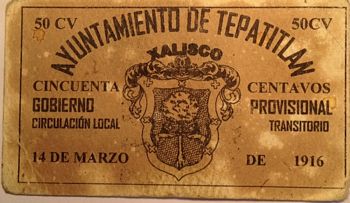
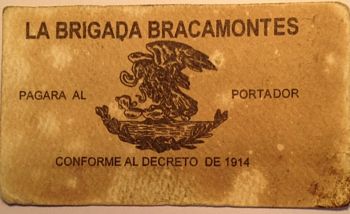 M2343 50c Brigada Bracamontes
This note is dubious. It purports to come from Tepatitlán de Morelos, a city located in the area known as Los Altos de Jalisco (the 'Highlands of Jalisco'), about 70 km east of Guadalajara, be issued by the Brigada Bracamontes, be dated 14 March 1916 and refer to a decree of 1914.
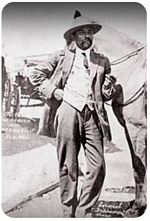
The "Brigada Bracamontes" was a revolutionary military unit commanded by Pedro T. Bracamontes.
Bracamonte was born in the state of Sonora. In June 1906, together with his brother Macario, he participated in the strike at the Overview mine, in Cananea. The following year, during the period of unemployment in the mines of the state, he worked as a waiter in a hotel and as a mechanic. At the end of 1910, he joined the armed struggle led by Madero against the government of Porfirio Díaz and after the Maderista triumph he was appointed prefect of the district of Moctezuma and as such, fought and defeated rebel Orquistas on 20 August 1912. After Huerta’s coup d’état Bracamonte joined the state troops by organizing a contingent of 220 men in his district and 200 more in the municipality of Nacozari and fought the federal forces. As military chief of Agua Prieta, at the end of May he faced an arrest warrant from the marshal of Douglas, Arizona, in retaliation to what was considered a breach of trust by the Constitutionalists, who had smuggled an airplane from the U. S. In December 1913 he joined Villa’s División del Norte and was appointed Presidente Municipal of Chihuahua, a post he held until April 1914. He was promoted to Colonel and commanded the Villista army during Carranza’s visit during the first days of April. He attended the Convention of Aguascalientes held in October 1914 and was promoted to General.
The Brigada Bracamontes fought during the 1915 battles of Celaya and was noted for defending Villa's retreat in Irapuato. 130 officers and an unknown number of soldiers were taken prisoner. Benjamin Hill ordered the captured officers to step forward to identify themselves and they would be released. When they did so, they were surrounded. placed against a wall and shot.
However, Pedro Bracamontes obviously escaped execution.
In April 1916 it was reported that he had been cornered in the Cañon de Juchipila, a region in the south of Zacatecas about 120 kilometres north of Tepatitlán, by a combined force from the states of Zacatecas, Jalisco and AguascalientesEl Pueblo, Año III, Tomo I, Núm. 527, 7 April 1916.
We need more information to decide whether Bracamontes was in a position to promote such a local issue in March 1916.